Jesus told them another parable: “The kingdom of heaven is like a man who sowed good seed in his field. But while everyone was sleeping, his enemy came and sowed weeds among the wheat, and went away. When the wheat sprouted and formed heads, then the weeds also appeared. “The owner’s servants came to him and said, ‘Sir, didn’t you sow good seed in your field? Where then did the weeds come from?’ “‘An enemy did this,’ he replied. “The servants asked him, ‘Do you want us to go and pull them up?’ “‘No,’ he answered, ‘because while you are pulling the weeds, you may uproot the wheat with them. Let both grow together until the harvest. At that time I will tell the harvesters: First collect the weeds and tie them in bundles to be burned; then gather the wheat and bring it into my barn.’ ”
– Matthew 13:24-30
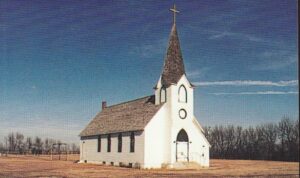
The church is the body of Jesus. It is a collection of like-minded individuals. The church is a blood-filled organism: filled with the blood of Jesus. When Jesus says, “For where two or three gather in my name, there am I with them” (Matthew 18:20), He is referring to individuals, to people: not buildings. The body of Jesus may meet in a church building, but the building is not the church. The people can meet anywhere. So, the church is people. This concept is very important.
The concept of the church is sometimes explained as constituting both a visible and an invisible element. The invisible church consists of what a viewer cannot see: particularly, those who have died in the faith, the saints. The visible church consists of what a viewer can see: those who are still alive, both saints and sinners. Lutheran hymnals have traditionally distinguished between “The Church Militant” and “The Church Triumphant.” The Church Triumphant has fought the good fight and has died (examples: Ye Watchers And Ye Holy Ones, Jerusalem The Golden, etc.). The Church Militant is still fighting the good fight and is still alive (examples: A Mighty Fortress Is Our God, Fight The Good Fight, etc.). This traditional distinction is comparable to the following parable of Jesus.
Jesus’ “Parable of the Wheat and the Tares” describes the visible church. Specifically, it describes the visible church as it waits for judgment day. In the parable, what does the visible church do as it waits for judgment day? – it appears to do nothing, except wait. People, like Martin Luther, say that the visible church consists of both saints and sinners. According to Jesus’ parable, those people are correct. What people like Luther call saints and sinners, Jesus calls wheat and tares. They cohabit the visible church. They exist together, side by side.
Must or should the visible church root out (or, “pull out by the root”) all sinners? – not according to Jesus’ parable. Only the angels on judgment day root out all sinners. What is the rationale behind this action on the angels’ part and this inaction on the visible church’s part? Time must pass. Judgment day must come. Why? – because people change, perhaps over time. Someone like Luther could say that today’s sinner may be tomorrow’s saint. Someone like Jesus could say that today’s tare could be tomorrow’s wheat. Only Jesus knows what is in someone’s heart (“Knowing their thoughts, Jesus said, ‘Why do you entertain evil thoughts in your hearts?’ ” (Matthew 9:4). The visible church may bear Jesus’ name, but it lacks His discernment. This is why time must pass and judgment day must come.
Then he left the crowd and went into the house. His disciples came to him and said, “Explain to us the parable of the weeds in the field.” He answered, “The one who sowed the good seed is the Son of Man. The field is the world, and the good seed stands for the people of the kingdom. The weeds are the people of the evil one, and the enemy who sows them is the devil. The harvest is the end of the age, and the harvesters are angels. “As the weeds are pulled up and burned in the fire, so it will be at the end of the age. The Son of Man will send out his angels, and they will weed out of his kingdom everything that causes sin and all who do evil. They will throw them into the blazing furnace, where there will be weeping and gnashing of teeth. Then the righteous will shine like the sun in the kingdom of their Father. Whoever has ears, let them hear. – Matthew 13:36-43